Entry · Ref GHJPO7IH
How to Choose the Right Dune Buggy in Dubai
- Posted
- 2026-11-28
- Last amended
- 2026-11-28
- Account
- @dunebuggydubaiplace
Choosing a dune buggy in Dubai is less about picking the biggest engine and more about matching the vehicle, route and safety setup to the experience you want. The desert looks open and simple from a distance, but terrain, heat and driving rules shape the choice. A clear approach helps you avoid a buggy that feels uncomfortable, underpowered or unsuitable for the kind of sand you plan to cross.
Start with the kind of drive you want
Before comparing vehicles, decide what the drive should feel like. A short desert outing on gentle trails asks for different qualities than a longer ride over tall dunes. If the aim is a relaxed family experience, comfort, predictable handling and clear communication matter more than raw speed. If the aim is a more spirited off-road vehicle experience, power and suspension become more important, but so does the driver's ability to use them with control.
Think about who will be riding. Children, older passengers or anyone sensitive to heat and dust may prefer a calmer route with fewer steep climbs. A buggy that fits two people may feel cramped with gear, while a larger model can feel heavy for a first-time driver. The right match is the one that makes every passenger feel secure and keeps the driver focused.
It also helps to separate sightseeing from performance driving. Many people want photos, a stop on a sand dune and a taste of desert driving, not a demanding rally-style session. Being honest about that from the start narrows the choice quickly.
Check the vehicle type and seat layout
Dune buggies come in different layouts, from compact two-seat machines to wider models built for more passengers. Seat count is only the beginning. Look at the seating position, legroom, side support and how easily passengers can get in and out. Sand gets hot, and tight access can be awkward when the vehicle is parked on a slope.
A two-seat buggy often feels lighter and easier to place on a trail. It can be a good fit for couples or a parent with one older child. A four-seat option may suit a family, but extra weight changes how the buggy climbs and turns. Passengers should not be squeezed together just to keep everyone in one vehicle.
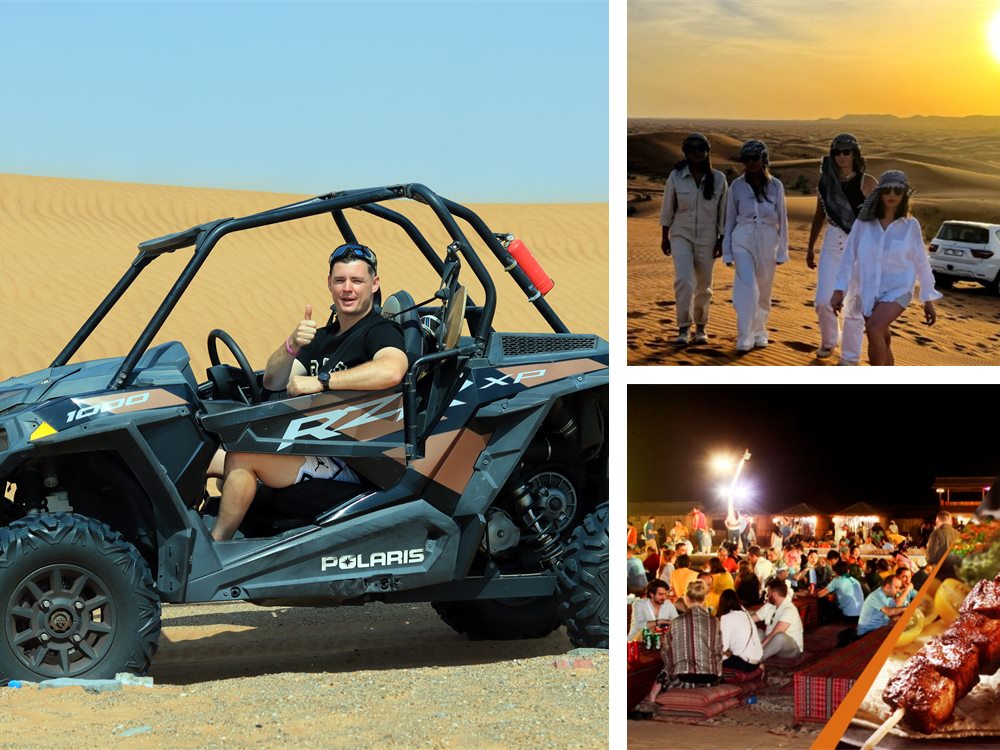
Ask how the seats are secured and whether each rider has a suitable safety harness. A lap belt alone is not the same as a properly fitted harness. Straps should sit snugly without twisting, and the fit should suit the rider's size. If a child is joining, confirm that the vehicle and route are appropriate rather than assuming any seat will work.
Also look at the roll structure and overall build. The frame should look complete, with no obvious damage or improvised repairs. A dune buggy is an off-road vehicle, but off-road use does not excuse worn mounting points or loose parts. Any unusual noise, cracked frame area or damaged seat mount is a reason to pause and ask before committing.
Match power and handling to experience
Engine size is easy to compare, yet it is not the whole story. A buggy with strong acceleration can be fun on open sand, but it also reacts faster to steering input and can become tiring on uneven ground. A less powerful vehicle with good suspension may be easier to control and more comfortable over long stretches.
New drivers should favour predictable handling over top speed. The desert changes under the wheels, and a sand dune can hide a sharp drop or a patch of soft sand. Smooth throttle control matters more than sudden bursts of power. If the buggy feels twitchy before you even leave the start area, it is unlikely to become calmer on the trail.
Suspension deserves close attention. Good suspension absorbs bumps and helps keep the tires in contact with the surface. Watch for vehicles that lean heavily in turns or bounce sharply after small ridges. Those traits can make a ride uncomfortable and can wear down confidence. A test of basic movement in a safe area, under supervision, can reveal more than a spec sheet.
Braking response also matters. The buggy should slow steadily and stop straight. If the pedal feels vague, the vehicle pulls to one side or the driver needs far more distance than expected, do not treat it as a minor detail. Brake problems are a job for a qualified professional, not something to ignore or adjust casually.
Ask how the route is planned
The route shapes the whole experience. A good plan considers the buggy type, passenger comfort, daylight, temperature and the condition of the sand. Ask whether the drive follows marked trails, how long it lasts, and where stops are planned. Clear answers usually point to a better organised outing than vague promises of endless dunes.
For a first ride, a guided tour can reduce uncertainty. The guide can choose terrain that suits the group, set a sensible pace and help drivers understand how the buggy behaves on sand. This matters because the surface can shift from firm to soft within a short distance. A route that looks easy on a map may demand more skill in practice.
Find out whether speed limits are explained and followed. In busy desert areas, other vehicles, quad bikes and camel routes may share space. Speed should be controlled, especially near stops, photo points and any place where passengers are loading or unloading. A plan that promises unlimited speed is not a mark of quality. It is a warning sign.
When comparing options, a name such as aljazeeratours.com may appear alongside other travel information, but the practical questions stay the same. What route is offered, how long is the drive, and what level of driving experience does it suit? Those answers help more than broad claims.
Review safety equipment before you ride
Safety gear should be part of the decision, not an afterthought. A helmet should fit properly, sit level and stay in place without pressing painfully. It should be suitable for off-road driving and in good condition. A damaged helmet or one that moves freely is not useful protection.
Check that the safety harness is clean, intact and correctly adjusted. Buckles should latch firmly, and straps should not be frayed. The driver should be able to reach controls comfortably while secured. Passengers should understand how to fasten and release their straps before the buggy moves.
Eye protection is worth considering too. Dust and blown sand can make it hard to see, especially when vehicles travel close together. Closed shoes, breathable clothing and sun protection add comfort without changing the nature of the ride. Loose scarves or dangling accessories can catch, so keep clothing simple and secure.
Listen to the briefing. It should cover hand signals, stopping distance, what to do if the buggy gets stuck and how to behave around other vehicles. If instructions are rushed or unclear, ask for them again. A confident operator will not mind repeating safety points.
Compare the full experience, not one feature
A sensible comparison looks at the whole outing. The buggy matters, but so do preparation, route choice, supervision and the way passengers are treated from arrival to return. Look for consistency between what is described and what is delivered at the start point. If the vehicle, gear and briefing all feel organised, the drive is more likely to feel controlled.
Be careful with decisions based only on appearance. A bright new buggy can still be a poor fit if the seat is uncomfortable or the route is too demanding. An older vehicle may be perfectly suitable if it is well maintained and handled by a careful driver. Condition, fit and planning carry more weight than shine.
It is also useful to compare how different options handle heat and breaks. Desert driving can be tiring even when the route is short. Shade, water and clear stop points make a real difference, particularly for families. These details may not be the first thing you notice, but they often shape how the ride feels.
Browsing aljazeeratours.com can be one part of research, but the best choice still comes from asking precise questions and reading the answers carefully. A good provider can explain the buggy type, safety setup and route in plain language without relying on vague promises.
Make the final choice with a calm check
Once you have narrowed the options, do a final pass before booking or setting off. Confirm the number of riders, the buggy size, the route level and the safety equipment. Make sure the driver understands the basic controls and what to do in an emergency. If anything feels rushed, slow the decision down.
Watch for warning signs such as unclear briefings, pressure to drive faster than feels comfortable, missing safety gear or a route that changes without explanation. These issues are easy to overlook when the desert setting feels exciting. Calm judgment is part of good desert driving.
The right dune buggy dubai choice is rarely the one with the loudest claims. It is the vehicle and outing that fit the riders, suit the terrain and keep safety visible at every stage. When those pieces line up, the drive feels smoother, the stops feel easier and the desert experience stays enjoyable from beginning to end.